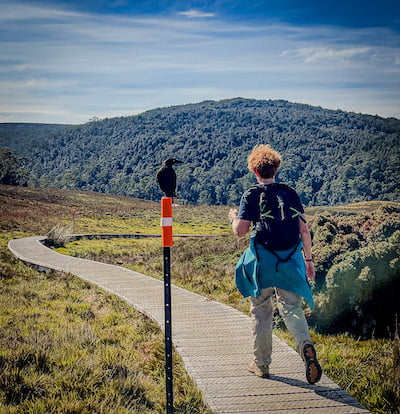
Every year, sometime in late April, Tasmanians start watching the weather forecast with an urgency that has nothing to do with the weekend. The question isn’t whether it’ll rain. The question is: has the fagus turned yet? The turning of the fagus is one of those things that sounds like it’s been oversold until you actually stand on the Tarn Shelf at Mount Field and look up at a slope of Rodway Range blazing orange and gold in the early morning light. Then you understand why locals drive hours for it.
This guide covers what this curious event is, where to go, when to go, which walks give you the best colour.
What Is the Fagus?
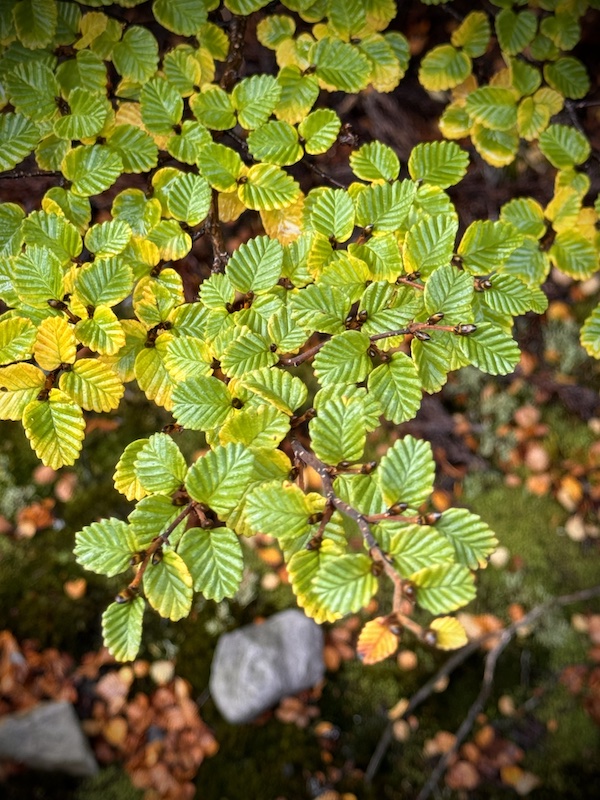
Fagus — properly Nothofagus gunnii, or Deciduous Beech — is Australia’s only cold-climate winter-deciduous native tree. You won’t find it anywhere else on Earth. It’s an ancient Gondwanan survivor that’s been here for around 100 million years, and it’s found only in Tasmania’s wet highland areas, mostly above 800 metres.
Locals also call it tanglefoot — for good reason. The twisted, low-growing branches form dense thickets that have tripped up more than a few walkers who tried to move off-track. Going Fagus hunting? Keep to the path!
There’s less than 10,000 hectares of it in the entire state. That rarity is part of why the turning matters so much to people who live here.
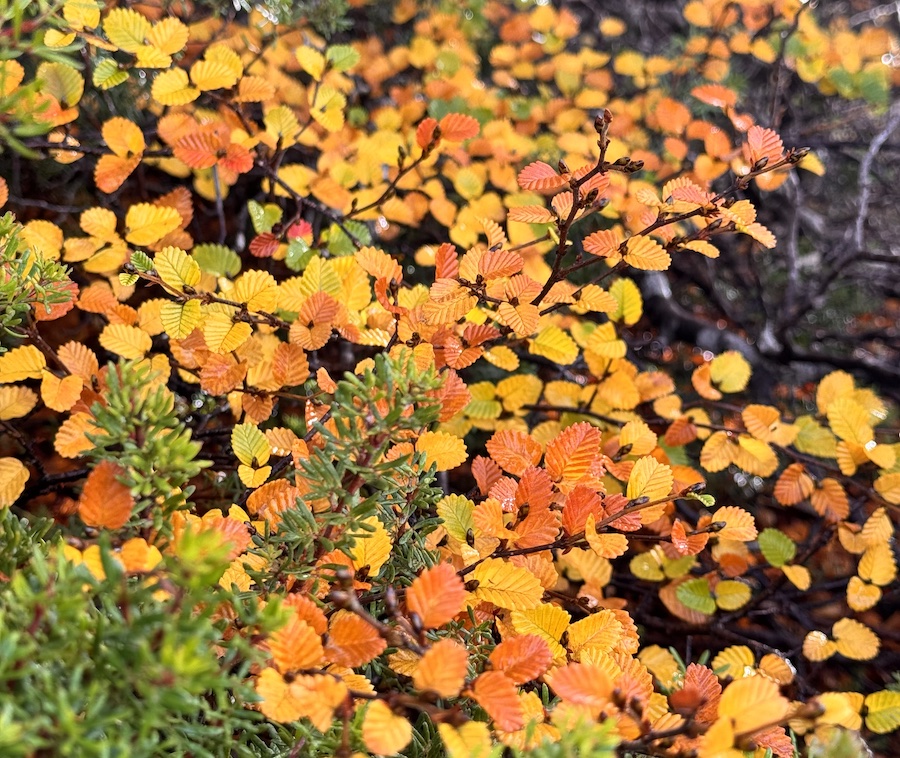
The turning of the fagus describes the time each year that Fagus leaves turn from tree frog green to gorgeous gold, yellows, orange and red during Autumn. The effect in the surrounding landscape of the fagus turning is dramatically beautiful, lighting the bush up with Autumn colours.
When Does the Fagus Turn? (And Why Timing Is Everything)
The peak window is late April to early May — but it’s short, weather-dependent, and slightly different at each location.
Generally, Mount Field National Park peaks a week or two before Cradle Mountain. Mount Field’s Tarn Shelf tends to hit peak colour in the last two weeks of April. At Cradle Mountain, peak is typically early-to-mid May. Time your Tasmania trip right, and you can see the splendour at both locations!
The whole display lasts about three weeks before the leaves drop. Miss the window and you’re looking at bare brown branches. When the buzz starts on social media and people start posting photos from the Tarn Shelf, take it seriously. Don’t wait a week thinking there’s more time.
Check the Parks Tasmania website and their socials for fagus updates as April approaches. Rangers post condition reports during the turning season.
Mount Field National Park: See Fagus from Hobart
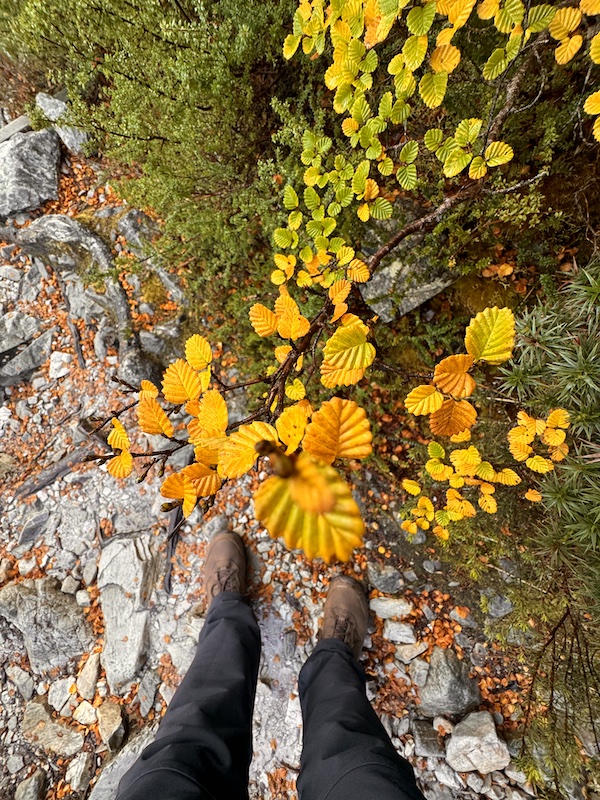
If I had to pick one place for the turning of the fagus, it’s Mount Field. It’s just over an hour from Hobart, which means you can leave at 6am, be on the Tarn Shelf by 8, and still make it back to Hobart for dinner. Cradle Mountain is spectacular also, and the Turning of the Fagus is our favourite time of year to go.
Why? In one word – colour. Autumn in Tasmania is the best of all the seasons here.
If you’re heading to Mt Field, here’s how to choose which walk suits you:
Walk 1: Tarn Shelf Circuit (Full Day, Best Colour)
Distance: 16km depending on which variations you take. Time: 5–7 hours. Difficulty: Hard!
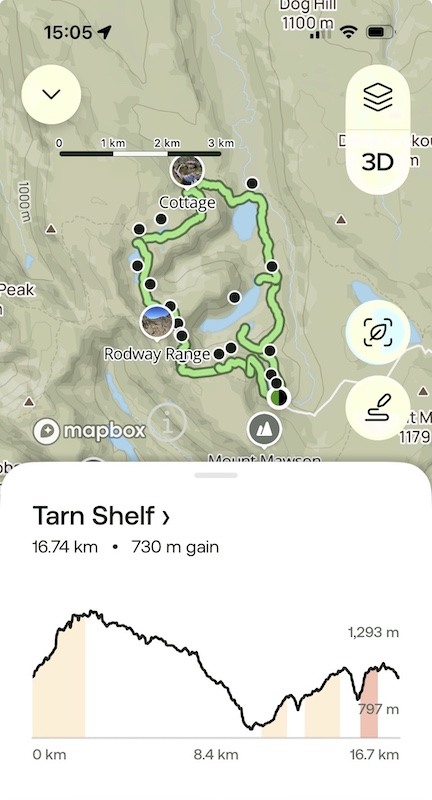
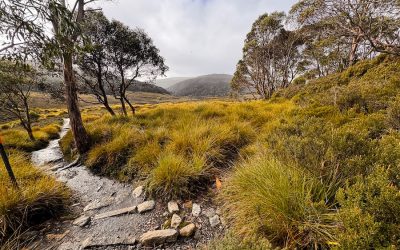
Start from the Lake Dobson car park (at the end of the Lake Dobson Road, about 20 minutes drive from the park entrance). The track climbs through snowgums and pandanis before levelling out across the Tarn Shelf — a bench of alpine land hanging off the Rodway Range, strung with glacial tarns.
The best fagus stands are beside the tarns just past Rodway Hut. The shelf faces east, which means if you start early enough, the morning sun hits the nearby orange slopes and reflects in the water below. It’s one of the genuinely beautiful things I’ve seen in Tasmania, and I’ve seen a lot of beautiful things here.
Go anticlockwise if you want to save the best views for last. Clockwise if you’re chasing the morning light.
Walk 2: Lake Fenton (Short, Accessible, Still Good)
Distance: 2.9km return. Time: 3 hours. Difficulty: Easy.
If the Tarn Shelf circuit feels like too much, Lake Fenton to Lake Webster offers a shorter 10km walk with an observation deck and good fagus nearby. There’s also the bonus of spotting colourful fungi along the track in autumn and locking eyes on the worlds tallest heath. The path is rocky and not that well maintained, but using something like Alltrails (downloaded off line) should keep you on track.
Drive past Lake Dobson on Lake Dobson Road and you’ll see patches of fagus before you even park.
Cradle Mountain: Bigger Scale, More Dramatic Scenery
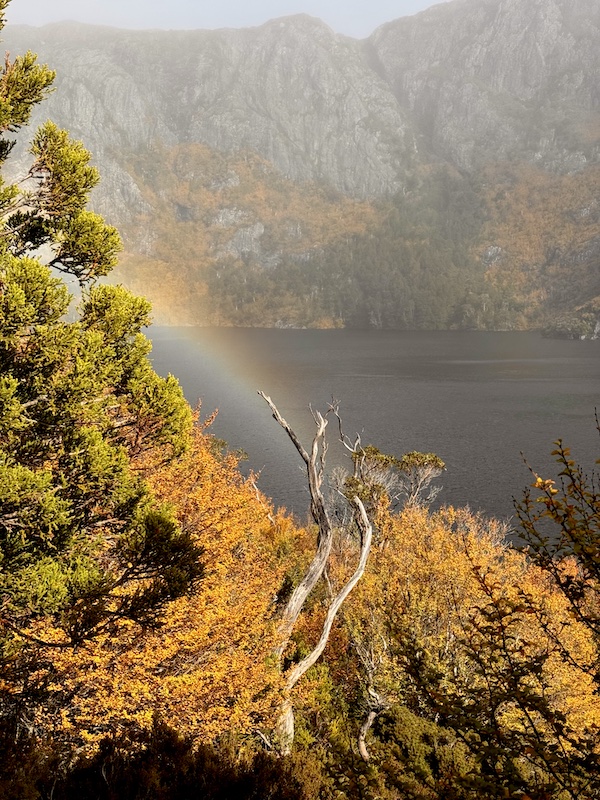
Cradle Mountain peaks a couple of weeks after Mount Field, typically early-to-mid May. The walking options here are different in character — more exposed, more dramatic, and with the dolerite peaks as a backdrop.
The Dove Lake Circuit (6km, 2–3 hours) is the main one everyone takes. It’s a loop around the lake that passes through stands of fagus. The Cradle Mountain shuttle bus (purchased separately from your parks pass) takes you to the Dove Lake car park. This walk is rated moderate and accessible to most travellers.
Crater Lake is worth the extra effort if you have energy and time — and it’s where we love to go. 2 hours return from Dove Lake, up into slopes that in good years are draped in colour. The steep sides of the cup-shaped lake and the fagus together make for something you’d struggle to photograph badly. A bit more up and down than Dove Lake, but also far more varied and interesting.
The Festival of Fagus runs each year for about two weeks during the turning season at Cradle Mountain. It includes guided walks, photography events, and other activities centred around the spectacle. Check the Cradle Mountain Lodge and Parks Tasmania websites for the 2026 Fagus dates.
If mobility is an issue, you can see the fagus turn on the very brief and easy to tackle Rainforest Walk. The walk starts right beside the Cradle Mountain Knowledge & Interpretation Centre. It’s the first shuttle bus stop inside the world heritage area.
Walls of Jerusalem: The Remote Option (For Experienced Hikers)
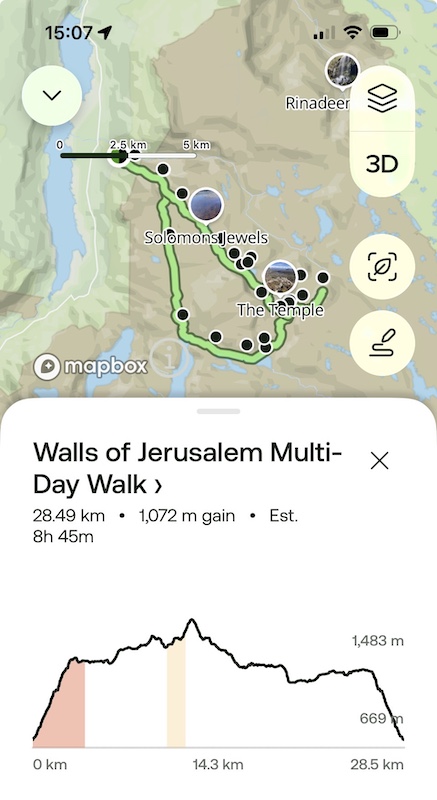
If you know what you’re doing in the bush and want a more remote fagus experience, the Walls of Jerusalem National Park offers highland fagus displays with almost none of the crowd. The Walls of Jerusalem Day Walk isn’t a beginners’ trip — it’s an 8 to9 hour day walk in from the trailhead, through changeable weather, with no facilities. But the fagus in the alpine basin there is genuinely other-worldly. Make the Central Highlands your base, plan well, go prepared and enjoy the colourful adventure of wild Tasmania in Autumn on this track.
Always check conditions and weather before heading in. The alpine areas in May can turn cold and wet with very little warning.
Practical Information
Parks Pass
You need a valid parks pass to enter both Mount Field and Cradle Mountain. As of April 2025, a daily vehicle pass is around $50 (covers up to 8 passengers). A holiday pass (valid 2 months, all parks) is $100 per vehicle. Purchase online at passes.parks.tas.gov.au or at the visitor centre on arrival.
Getting There
Mount Field is about 75km from Hobart — roughly 1 hour 10 minute drive via the Lyell Highway through New Norfolk. The Lake Dobson Road inside the park is unsealed gravel, but passable in a standard 2WD in dry conditions. In May it can be icy at the top; check conditions with the visitor centre before setting out (03 6288 1149).
Cradle Mountain is approximately 4 hours from Hobart and 1.5 hours from Devonport. 30 minutes from where we live if you chose to stay in our Tiny Home.
What to Wear
May in the Tasmanian highlands is cold, often surprisingly cold. Average temperatures at altitude drop to 5–10°C in the day, colder in wind and cloud. Bring:
- Waterproof jacket and pants
- Warm mid-layer (merino or fleece)
- Beanie and gloves
- Sturdy walking shoes or boots — trails can be muddy
- More food and water than you think you need
- A paper map or downloaded offline map — no phone signal on the Tarn Shelf
Starting Early
The Tarn Shelf car park at Lake Dobson fills fast on fine autumn weekends. I’ve seen it full by 9am. Leave Hobart by 6:30am if you’re going on a Saturday or Sunday in late April. The early start isn’t a punishment — the light on the tarns in the first hour after sunrise is worth the alarm clock.
Don’t Wait for a Better Year
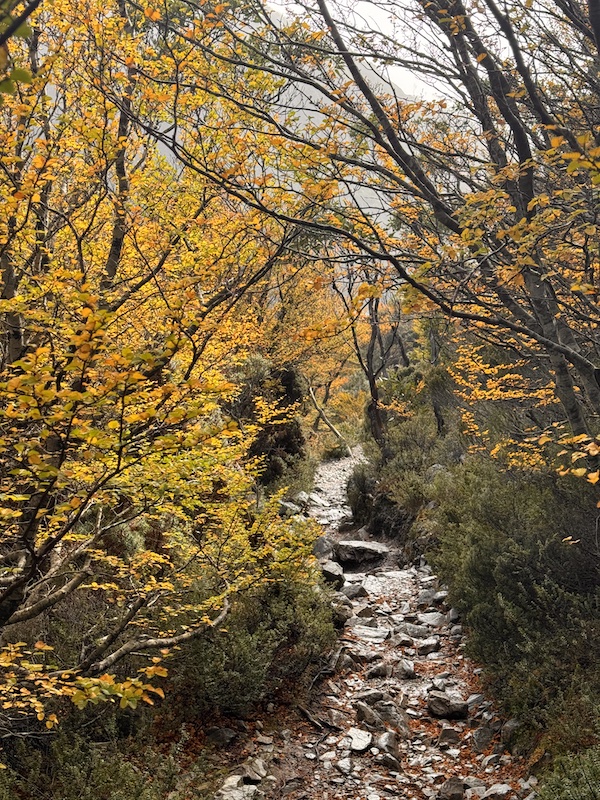
I’m a big fan of ‘there is no better time than now!’. The Fagus timing is always the same — late April, early May — and the display is over in a flash.
My suggestion? Put a reminder in your calendar for April 15. Start watching the Parks Tasmania website. When the first photos appear, block the weekend, set the alarm for 6am, and drive to Mount Field or Cradle Mountain.
The trees will be there. The colour will be extraordinary. And you’ll understand why Tasmanians watch the weather forecast with such urgency in autumn.
Frequently Asked Questions
When is the best time to see the fagus in Tasmania?
The turning of the fagus dates are about the same each year. Late April to early May is the peak window. Mount Field typically turns a week or two before Cradle Mountain. The entire display lasts about three weeks, so timing matters — when you see social media photos starting to flood in, that’s your signal to go.
Is Mount Field or Cradle Mountain better for the fagus?
Both are excellent but different. Mount Field is closer to Hobart (1 hour vs 4 hours), peaks earlier, and the Tarn Shelf walk is one of the most beautiful day walks in Australia. Cradle Mountain has more dramatic mountain scenery as a backdrop. If you can only do one, Mount Field is the easier choice for most visitors.
How long does the Tarn Shelf walk take?
The full circuit is 12–15km and takes 5–7 hours. Allow a full day if you want time to sit by the tarns, have lunch, and not rush. If you only have half a day, the shorter Lake Fenton loop (2.9km, under an hour) still gives you good fagus.
Do I need a parks pass to see the fagus?
Yes. Both Mount Field and Cradle Mountain require a valid parks pass. As of April 2025, a daily vehicle pass is $46.60. Buy it online in advance at passes.parks.tas.gov.au or at the visitor centre. Always check parks.tas.gov.au for current pricing.
Is the Tarn Shelf walk suitable for beginners?
The full circuit is moderate — it’s long with some elevation, and the alpine conditions in May can be demanding. Confident beginners with appropriate clothing and footwear will be fine. The track is well-marked. If you’re unsure, start with the Lake Fenton walk instead.
Can I see the fagus from the car?
Yes, partially. On the Lake Dobson Road inside Mount Field National Park, you’ll see roadside fagus patches as you drive up. For the real spectacle though — the slopes of the Rodway Range reflecting in the tarns — you need to walk the Tarn Shelf.
What other wildlife might I see on the Tarn Shelf?
Platypus live in Lake Dobson and the streams around the park. Wombats, wallabies, and echidnas are common on the walks. Wedge-tailed eagles are often spotted from the Tarn Shelf. With luck you might see an eastern quoll, though they’re shy. The dense fagus thickets also shelter scrub wrens and thornbills.